

Introduction
A well-structured travel planning guide is the foundation of every successful journey. Whether you are planning a short weekend getaway or an international vacation, proper planning helps you save time, reduce stress, and make the most of your trip. Without a clear plan, travelers often face last-minute confusion, higher expenses, and missed opportunities.
In today’s fast-paced world, smart travel planning is more important than ever. From choosing destinations and booking flights to managing budgets and organizing itineraries, every step plays a critical role in shaping your travel experience. A strong travel planning guide ensures you stay organized while still enjoying flexibility during your journey.
This comprehensive guide will walk you through every stage of the process in a simple and practical way. You will learn how to plan efficiently, avoid common mistakes, and create a travel experience that is smooth, enjoyable, and memorable. Whether you are a beginner or an experienced traveler, these insights will help you travel smarter and better every time.
What is a Travel Planning Guide?
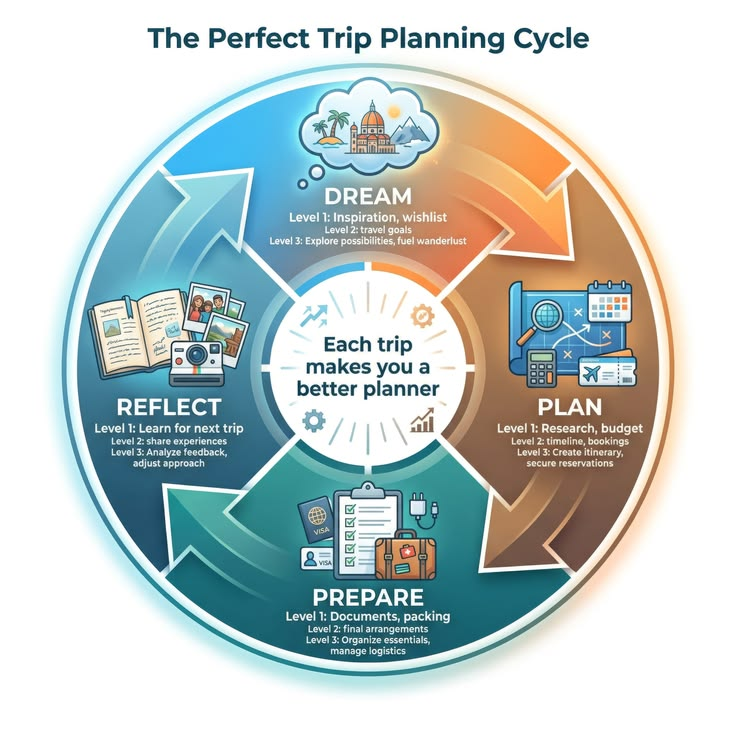
A travel planning guide is a structured approach that helps travelers organize every detail of a trip in advance. It includes selecting destinations, setting budgets, booking transportation, arranging accommodation, and planning daily activities.
Unlike random or spontaneous travel, a travel planning guide provides clarity and direction. It ensures that every aspect of the journey is carefully thought out, reducing uncertainty and improving overall experience.
In simple terms, it is a roadmap for your entire trip. It helps you understand where you are going, how you will get there, what you will do, and how much you will spend. This makes travel smoother and more enjoyable.
Why is a Travel Planning Guide Important?
A travel planning guide is essential for several reasons. It not only improves organization but also enhances the quality of your travel experience.
First, it helps you stay within budget. By planning in advance, you can compare prices, find better deals, and avoid unnecessary expenses.
Second, it saves time. Instead of making decisions during the trip, everything is already organized, allowing you to focus on enjoying your journey.
Third, it reduces stress. Knowing your accommodation, transport, and activities in advance eliminates uncertainty.
Lastly, it improves travel efficiency. A good plan ensures you visit the right places at the right time without wasting energy or missing important attractions.
Detailed Step-by-Step Guide
Step 1: Choose Your Destination
The first step in any travel planning guide is selecting your destination. Consider your interests, budget, and travel goals. Some travelers prefer relaxing beach destinations, while others enjoy cultural cities or adventurous mountain regions.
Research weather conditions, safety, and peak tourist seasons before finalizing your choice.
Step 2: Set a Realistic Budget
Budgeting is a crucial part of travel planning. Divide your expenses into categories such as transportation, accommodation, food, activities, and shopping.
Always include a buffer amount for emergencies or unexpected costs. A well-planned budget prevents financial stress during your trip.
Step 3: Book Flights and Transportation
Once your destination is confirmed, book your flights or other transportation early. Early bookings often come with lower prices and better seat options.
Also plan local transportation such as taxis, buses, or rental cars depending on your destination.
Step 4: Select Accommodation
Choose accommodation based on location, comfort, and budget. Staying near major attractions or transport hubs can save both time and money.
Read reviews and compare options before making a final decision.
Step 5: Create a Daily Itinerary

A detailed itinerary is a key part of a travel planning guide. Plan your activities day by day, but keep some flexibility for unexpected opportunities.
Include major attractions, local experiences, food spots, and relaxation time.
Step 6: Pack Smartly
Packing is often underestimated but plays a major role in travel success. Make a checklist of essentials such as clothing, documents, chargers, and medications.
Pack according to weather conditions and trip duration. Avoid overpacking to keep your luggage manageable.
Step 7: Prepare Travel Documents
Ensure your passport, visa, ID cards, and tickets are ready before departure. Keep digital and physical copies for safety.
Double-check expiration dates to avoid last-minute issues.
Benefits of Travel Planning Guide
- Helps you stay organized and prepared
- Reduces travel stress and confusion
- Saves money through early bookings and budgeting
- Improves time management during trips
- Enhances travel experience with better planning
- Prevents last-minute emergencies
- Allows better exploration of destinations
- Increases safety and confidence while traveling
Disadvantages / Risks
- Requires time and effort before the trip
- Can reduce spontaneity if over-planned
- Unexpected changes may disrupt fixed schedules
- Over-reliance on planning tools may limit flexibility
- Poor planning decisions can still affect the trip
Common Mistakes to Avoid
One of the biggest mistakes travelers make is overpacking their schedule. Trying to fit too many activities in a short time leads to exhaustion and reduced enjoyment.
Another common mistake is ignoring local weather conditions. This can affect your comfort and travel plans significantly.
Many travelers also forget to compare prices before booking, resulting in higher costs.
Lastly, not keeping backup plans for transport or accommodation can create serious issues in case of delays or cancellations.
FAQs
1. What is the purpose of a travel planning guide?
A travel planning guide helps organize every aspect of a trip, including budgeting, booking, and scheduling, to ensure a smooth travel experience.
2. How early should I start planning a trip?
It is recommended to start planning at least 1–3 months in advance, especially for international travel, to get better deals and availability.
3. What should be included in a travel itinerary?
A good itinerary includes destinations, travel times, accommodation details, daily activities, and rest periods.
4. How can I reduce travel costs?
You can reduce costs by booking early, comparing prices, traveling during off-season, and using budget-friendly accommodation options.
5. Is travel insurance necessary?
Yes, travel insurance is highly recommended as it protects against unexpected events like cancellations, medical emergencies, or lost luggage.
6. Can I travel without a fixed plan?
Yes, but it may lead to higher costs and confusion. A basic travel planning guide helps maintain balance between structure and flexibility.
7. What is the most important part of travel planning?
Budgeting and itinerary creation are often considered the most important parts because they directly affect your experience and expenses.
Expert Tips & Bonus Points
Experienced travelers always recommend starting with flexible planning. Instead of rigid schedules, create a balanced itinerary that allows room for exploration.
Use travel apps to track flights, bookings, and local attractions. This helps keep everything organized in one place.
Always research local culture and customs before traveling. This improves your interaction with locals and enhances your experience.
Another useful tip is to travel light. Carrying fewer items makes movement easier and reduces stress.
Finally, always have a backup plan for transportation and accommodation to avoid last-minute issues.
Conclusion
A well-designed travel planning guide transforms your travel experience from chaotic to organized and enjoyable. It ensures that every aspect of your journey is carefully managed, from budgeting and booking to exploring and returning safely.
By following a structured approach, travelers can avoid unnecessary stress, save money, and make the most of their time at each destination. Whether you are traveling for leisure, business, or adventure, proper planning always leads to better outcomes.
In the end, travel is not just about reaching a destination but about enjoying every moment of the journey. With the right planning strategy, you can create unforgettable experiences that are smooth, efficient, and truly rewarding.
